
PSAT Score Range and Percentiles: The Complete 2026 Guide for Students and Parents
On this page
- The Short Answer: PSAT Score Ranges and What They Mean
- PSAT Score Ranges by Test Version: PSAT/NMSQT, PSAT 10, and PSAT 8/9
- Grade-by-Grade PSAT Percentile Benchmarks for 2026
- 11th grade user percentiles (PSAT/NMSQT)
- 10th grade user percentiles (PSAT 10 or PSAT/NMSQT)
- PSAT 8/9 percentile benchmarks
- My Score Came Back and I Have No Idea If It Is Good: How to Read Your PSAT Percentile
- What PSAT Score Do You Need for National Merit? Cutoffs, Selection Index, and State Variation
- How PSAT Scores Predict SAT Readiness and What to Do Next
- Frequently Asked Questions About PSAT Score Ranges and Percentiles
- What PSAT score puts a student in the top 1%?
- Is a 980 a bad PSAT score?
- Is a 740 Math section score bad on the PSAT?
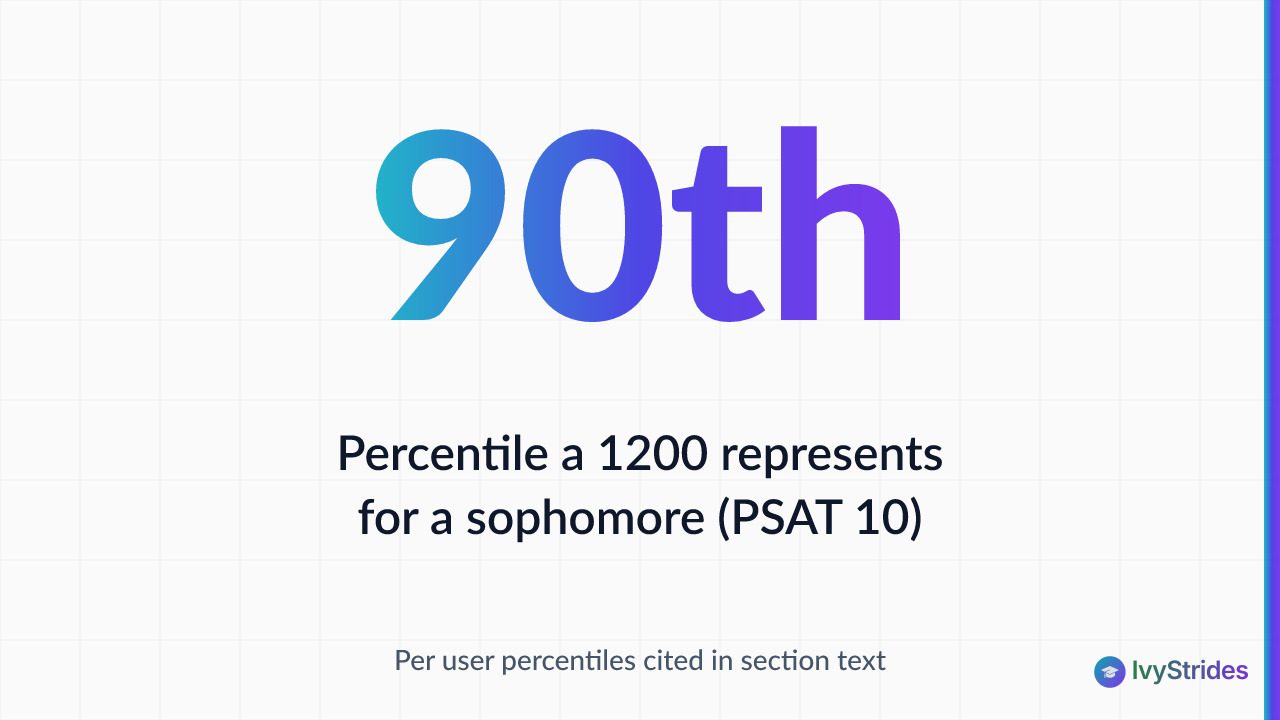
- Is a 1200 a good PSAT 10 score for a 10th grader?
- What is a 95th percentile PSAT score?
- Do colleges see PSAT 8/9 scores?
- What is a good PSAT score for a sophomore?
- If I scored 1340 on the PSAT, will I do well on the SAT?
- Where to Go From Here
The PSAT/NMSQT and PSAT 10 total score range is 320 to 1520, split evenly between Reading and Writing (160 to 760) and Math (160 to 760). The PSAT 8/9 uses a lower 240 to 1440 scale. Per College Board user percentile data, a total of roughly 980 sits at around the 50th percentile for 11th graders, about 1270 reaches the 90th, and 1420 or above places a 10th grader in the top 1%. Percentiles are grade-specific, so the same number carries different weight depending on when you sat the test.
These benchmarks come from College Board's annually updated user-percentile tables at research.collegeboard.org, which we cite section by section below. The harder question, and the one this guide is built to answer, is what your section split says about your SAT prep priorities and, for juniors, whether your Selection Index puts National Merit within reach.
The Short Answer: PSAT Score Ranges and What They Mean
Here is the compressed version, one line per test version.
- PSAT/NMSQT (juniors, some sophomores): 320 to 1520. Reading and Writing 160 to 760. Math 160 to 760. This is the test that feeds National Merit.
- PSAT 10 (sophomores): 320 to 1520, same section structure. Does not qualify for National Merit.
- PSAT 8/9 (8th and 9th graders): 240 to 1440. Scores are not sent to colleges.
Percentile anchors below use the most recently published College Board user-percentile tables:
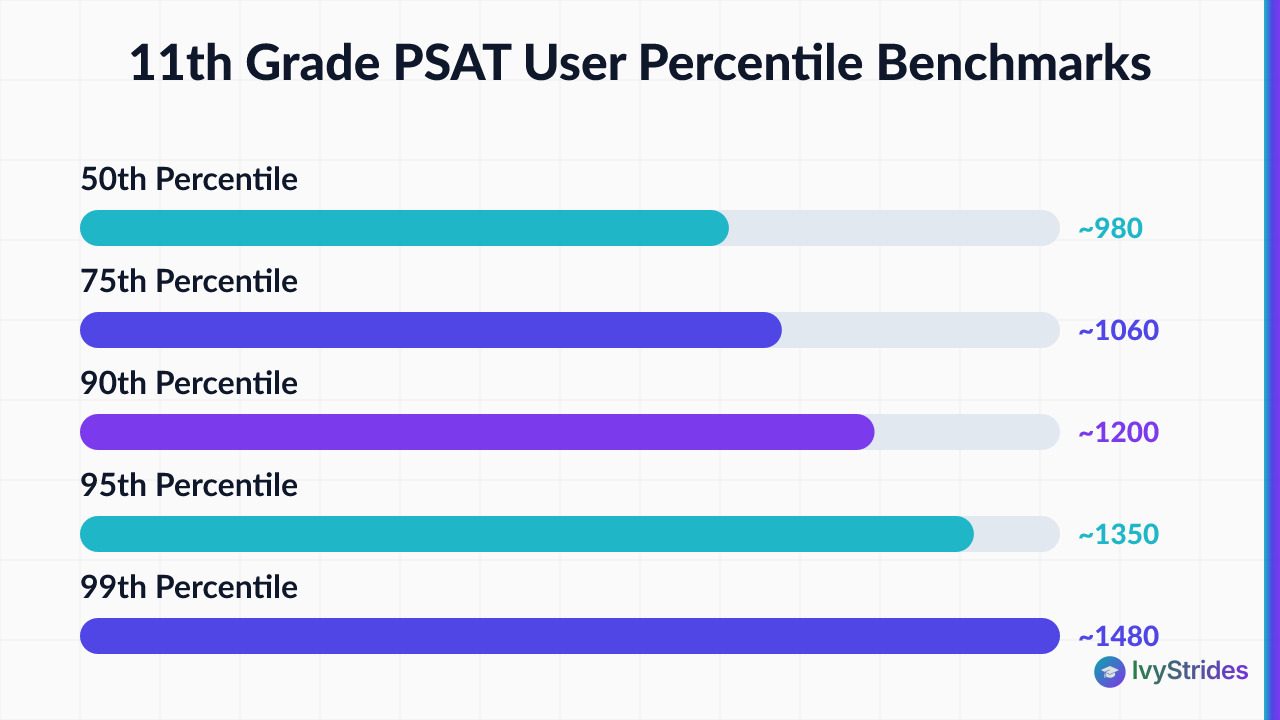
- 11th grade: ~980 = 50th percentile, ~1060 = 75th, ~1200 = 90th, ~1350 = 95th, ~1480 = 99th.
- 10th grade: ~920 = 50th, ~1050 = 75th, ~1170 = 90th, ~1290 = 95th, 1420 to 1520 = top 1%.
- A 740 Math section score is the ceiling and sits at roughly the 99th percentile. Same for a 740 Reading and Writing.
If you want a fast gut check: a 1200 is a strong sophomore score and a solid but improvable junior score. Roughly 1350+ as a junior puts National Merit Semifinalist on the table depending on your state.
PSAT Score Ranges by Test Version: PSAT/NMSQT, PSAT 10, and PSAT 8/9
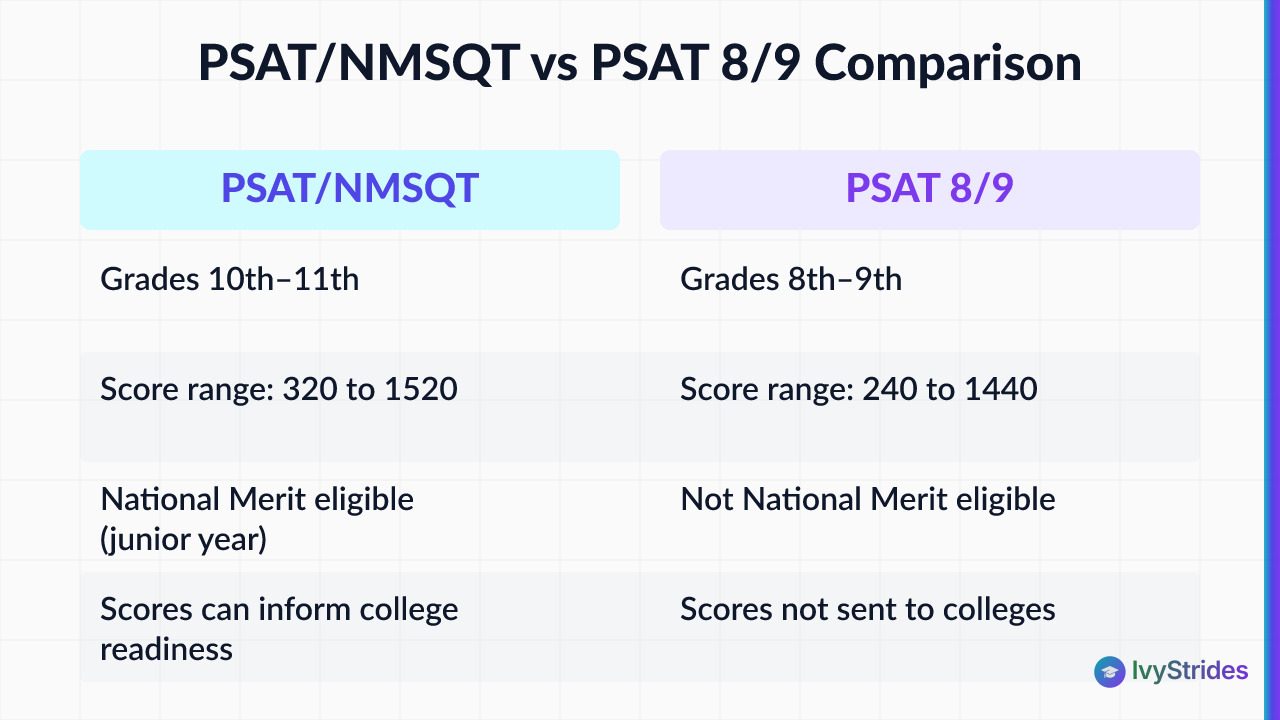
"PSAT" covers three separate exams. Confusing them is the single most common source of frustration we see when parents open a score report.
PSAT/NMSQT. Taken by most students in 11th grade, occasionally in 10th. Total score: 320 to 1520. Two sections, Reading and Writing (160 to 760) and Math (160 to 760), summed for the total. This is the only PSAT that feeds the National Merit Scholarship Program.
PSAT 10. Same scale, same 320 to 1520 range, same two sections. Built for sophomores. It does not qualify for National Merit, no matter how high the score. Its job is to give a mid-high-school SAT readiness snapshot.
PSAT 8/9. A different test with a different ceiling: 240 to 1440. Designed for 8th and 9th graders. Per College Board policy, PSAT 8/9 scores are not sent to colleges and play no role in admissions. Treat it as an early diagnostic, nothing more.
Quick reference:
| Test | Grade | Score range | National Merit eligible |
| PSAT 8/9 | 8th, 9th | 240 to 1440 | No |
| PSAT 10 | 10th | 320 to 1520 | No |
| PSAT/NMSQT | 11th (10th) | 320 to 1520 | Yes, junior year sitting only |
| SAT | 11th, 12th | 400 to 1600 | N/A |
All four belong to the SAT Suite of Assessments and share a linked score scale, which is why your PSAT sits so cleanly as a diagnostic baseline for SAT prep. For a deeper look at what score is considered strong at each grade level, see our guide to what a good PSAT score means in 2026. If you want the underlying test-design contrast, we cover the difference between SAT and PSAT separately.
Grade-by-Grade PSAT Percentile Benchmarks for 2026
This is the section most readers came here for: what does my score mean compared to other students in my grade?
Two definitions first, because they change how you read the numbers.
User percentiles rank you against actual test takers over the past three school years. This is the percentile that appears on your score report.
Nationally Representative Sample percentiles rank you against a modeled population of all US students in your grade, including those who never sat the PSAT. NRS percentiles run higher than user percentiles because the reference group is weaker.
We use user percentiles below. They're the honest comparison against your actual peer group.
11th grade user percentiles (PSAT/NMSQT)
- 50th percentile: around 980
- 75th percentile: around 1060
- 90th percentile: around 1200
- 95th percentile: around 1350
- 99th percentile: around 1480
A junior with an 1100 sits at roughly the 66th percentile. A 1200 clears about the 90th. A 1270 lands near the 93rd to 94th.
10th grade user percentiles (PSAT 10 or PSAT/NMSQT)
- 50th percentile: around 920 to 960
- 75th percentile: around 1050
- 90th percentile: around 1170
- 95th percentile: around 1290
- 99th percentile (top 1%): 1420 to 1520
A sophomore with an 1100 is roughly at the 81st percentile. A 1200 clears about the 90th. A 1250 sits near the 93rd for 10th graders.
PSAT 8/9 percentile benchmarks
The PSAT 8/9 has separate user-percentile tables for 8th and 9th grade, published on the College Board research portal. Because the ceiling is 1440 and the test targets earlier skills, absolute score numbers run lower. For a 9th grader, roughly 950 sits near the 75th percentile and around 1050 near the 90th. For 8th graders, those thresholds drop by roughly 50 to 80 points.
One caveat: College Board updates percentile tables annually. Before you make a Semifinalist bet or an SAT target commitment on any single number, verify the current-year figures on College Board's score-interpretation pages. If you're wondering whether a 1280 is worth flexing about, we break it down score by score in our post on is 1280 a good PSAT score. Sophomores can find tailored benchmarks in our guide to good PSAT scores for 10th graders.
My Score Came Back and I Have No Idea If It Is Good: How to Read Your PSAT Percentile
Look, receiving a PSAT score report without context is like being handed a lab result with no reference range. The number sits on the page and stares at you.
Here's the frame that helps.
A percentile rank is the percentage of students in your grade who scored at or below your total. A 90th percentile means 90 percent of test takers in your grade scored equal to or lower than you. That's a strong position, not an average one.
Rough score-band labels for juniors, using user percentiles:
- Below 900: below average, meaningful room to grow before the SAT
- 900 to 1050: average to solid
- 1060 to 1200: strong, competitive for many state flagships
- 1200 to 1350: great, on the edge of National Merit consideration in some states
- 1350+: outstanding, Semifinalist territory in most states
For sophomores, shift every band down by roughly 60 to 100 points because the reference group is younger.
Some specific reader questions we get a lot:
Is a 980 a bad PSAT score? No. It's around the 50th percentile for 11th grade. That's the national average, not a warning sign. It does mean there's a meaningful gap between where you are and a competitive score for selective colleges, which is what SAT prep addresses.
Is a 1200 a good PSAT 10 score? Yes. For a sophomore, 1200 is approximately the 90th percentile. Strong result.
Is a 1170 a good PSAT score? For a 10th grader, yes, around the 90th percentile. For an 11th grader, it's closer to the 80th, still solid, but below the Semifinalist threshold in every state.
Is a 740 Math section score bad? A 740 is the maximum possible section score. It's roughly the 99th percentile. Same for 700+ on Reading and Writing.
Here's the part most students miss: your section breakdown matters more than your total. A junior with a 1200 made of 700 Reading and Writing and 500 Math has a very different SAT prep plan than a junior with a 1200 made of 550 and 650. The first needs targeted Math Module 2 work. The second needs a balanced push in both sections. Same total, opposite tactics.
In our coaching, students who review their section breakdown before starting SAT prep consistently identify their highest-use weakness faster than students who begin with a generic curriculum. That's not a marketing line, it's a scheduling reality: section-specialist coaching only works if you know which section to specialize in.
Once you know your percentile, the natural next question is whether your PSAT results are strong enough to predict SAT success, which we cover in our PSAT results and SAT success in 2026 analysis. If you're still waiting on your results, our guide on when PSAT scores come out explains the release timeline and how to access your report.
What PSAT Score Do You Need for National Merit? Cutoffs, Selection Index, and State Variation
National Merit is where PSAT percentiles stop being informational and start carrying real scholarship and admissions weight. A few facts to get straight before we talk cutoffs.
Only the PSAT/NMSQT taken in 11th grade qualifies. Not PSAT 10. Not PSAT 8/9. Not a PSAT/NMSQT taken as a sophomore. Junior year, one shot.
National Merit uses the Selection Index, not your total score. The Selection Index is calculated from your section scores on a scale of 48 to 228. It weights the Reading and Writing section differently from a straight total, which is why two students with the same 1400 total can have different Selection Indexes and different Semifinalist outcomes. Verify the current-year formula on the official PSAT/NMSQT page before using it to project.
Semifinalist cutoffs vary by state. The top scoring roughly 1 percent of juniors in each state are named Semifinalists. Historically, cutoffs have ranged from around 207 in lower-competition states to around 223 in the most competitive states like California, New Jersey, and Massachusetts. That range corresponds to total-score equivalents roughly in the 1400 to 1520 band, though the exact mapping shifts each cycle.
Commended Scholar is a single national cutoff. Students below their state's Semifinalist line but above the national commended cutoff (historically around 207 to 209 on the Selection Index) are named Commended Scholars. It's a national number, not state-specific.
Class of 2026 cutoffs are announced in fall 2025 by the National Merit Scholarship Corporation. Any specific cutoff number you read online should be tied to a class year, because these move annually.
The takeaway for a junior sitting at, say, roughly 1330 with a Selection Index around 200: you're in commended range in most states, on the bubble in some, and out of Semifinalist reach in California. For a sophomore sitting at 1330 on the PSAT 10, that same score becomes interesting as a National Merit preview once you factor in a year of growth and targeted prep before the junior-year PSAT/NMSQT.
How PSAT Scores Predict SAT Readiness and What to Do Next
The PSAT and SAT share a scale by design. That's not a marketing claim, it's the structural reason your PSAT is one of the best predictors of your unprepped SAT starting point.
Rough mappings we use when planning:
- PSAT 1100 to SAT ≈ starting somewhere around the 1100 to 1180 range without prep
- PSAT 1200 to SAT ≈ starting around 1200 to 1260
- PSAT 1300 to SAT ≈ starting around 1300 to 1360
These are baselines, not ceilings. For students completing our full 1-on-1 SAT program, a 200+ point gain from baseline is typical. So a junior sitting at a 1200 PSAT isn't looking at "an 1230 SAT and that's it." They're looking at a realistic path to roughly the 1400 to 1450 range if prep is diagnostic-driven and section-targeted.
The diagnostic-driven methodology has three moving parts:
-
A real baseline. A full-length timed practice test under real conditions, before any prep decisions. Taking a full-length timed PSAT practice test before your official sitting is the fastest way to get a reliable baseline to interpret against these percentile tables. Our PSAT 1-on-1 prep resources include practice-test packs built for this.
-
Targeted weakness work. Not "Math practice." Specific weakness targeting, like Digital SAT Math Module 2 advanced algebra, or Reading and Writing rhetorical synthesis questions.
-
Spaced retesting. A new full-length every 3 to 4 weeks to verify gains are sticking and to reset targets.
Section-specialist coaching matters here because Reading and Writing question types and Math question types require different tactical libraries. A tutor strong in Math but weak in the new Digital SAT Reading and Writing rhetorical questions will leave points on the table.
If you're wondering whether the PSAT is harder than the SAT or how the two scales relate, that comparison is covered in our is the PSAT harder than the SAT breakdown. For students planning the full push from PSAT baseline to SAT target, we walk through the math and timeline in how to raise your SAT score 200 points.
One honest note: the PSAT is slightly shorter and has no experimental content, so PSAT scores can very modestly underestimate SAT potential once you've done targeted prep. Don't read a PSAT 1180 as a hard ceiling. Read it as a starting line.
Frequently Asked Questions About PSAT Score Ranges and Percentiles
What PSAT score puts a student in the top 1%?
For 10th graders, roughly 1420 to 1520 places a student in the top 1%, around the 99th percentile of user percentiles. For 11th graders the threshold is a bit higher because the reference group is more competitive; the 99th percentile for juniors sits around 1480. The perfect PSAT score is 1520.
Is a 980 a bad PSAT score?
No. A 980 is approximately the 50th percentile for 11th graders, meaning it's the national average for actual test takers. It's not a warning sign. It does indicate meaningful room to grow before the SAT, particularly if you're aiming at selective colleges where competitive SAT scores typically start around 1400.
Is a 740 Math section score bad on the PSAT?
A 740 on Math is the maximum possible section score and sits at roughly the 99th percentile. It's an outstanding result. Same story for a 700 or higher on Reading and Writing. These section-level ceilings matter most for juniors chasing Semifinalist status, since the National Merit Selection Index favors strong section scores.
Is a 1200 a good PSAT 10 score for a 10th grader?
Yes. A 1200 on the PSAT 10 places a sophomore at approximately the 90th percentile. For context, the 75th percentile for 10th graders sits around 1050 and the 50th around 920 to 960. A 1200 sophomore who does diagnostic-driven prep is well positioned for a 1350+ SAT.
What is a 95th percentile PSAT score?
For 11th graders, roughly 1350 reaches the 95th percentile. For 10th graders, the 95th sits around 1290. Scores in this range signal strong National Merit potential for juniors and a solid SAT baseline for sophomores.
Do colleges see PSAT 8/9 scores?
No. Per College Board policy, PSAT 8/9 scores are not sent to colleges and play no role in admission decisions. They exist as a diagnostic for students, families, and schools to track readiness for future SAT Suite tests. Use them for planning, not for stress.
What is a good PSAT score for a sophomore?
For a 10th grader, 1050 or above is around the 75th percentile, which is a solid benchmark. 1170 or above reaches roughly the 90th. That said, sophomores should focus less on the absolute total and more on which section is weaker, since that gap is precisely what targeted SAT prep addresses over the 12 to 18 months before the SAT. For a full walk-through of sophomore-year strategy, see our good PSAT scores for 10th graders guide.
If I scored 1340 on the PSAT, will I do well on the SAT?
A 1340 PSAT is a strong starting point, roughly the 93rd to 94th percentile for juniors. In our coaching, unprepped SAT scores in this band typically land in the 1300 to 1380 range, with meaningful gains possible through targeted section-specialist work. Your section breakdown, not your total, is the most useful data point for planning the next step. Our best PSAT practice tests roundup covers the resources we recommend. Our free downloads library has starter materials.
Where to Go From Here
Your PSAT number is a percentile-ranked diagnostic, not a verdict. What it tells you, cleanly, is how far you sit from your SAT target and, for juniors, whether the National Merit path is realistic. Both gaps are closable, but only with a plan that starts from your specific section breakdown rather than a generic curriculum.

Award-winning author (South Asian Book Award) and graduate of BITS Pilani and UCLA Luskin School of Public Affairs. Brings a published writer's eye to Common App essays and grammatical precision to SAT and ACT R&W instruction.