
Why All-Nighters Hurt Your SAT Scores
On this page
- What Happens to Your Brain During an All-Nighter?
- Why All-Nighters Feel Productive but Aren't
- How Much Sleep Do You Need Before the SAT?
- What to Do the Night Before the SAT Instead of Cramming
- How to Build Sleep Into Your SAT Study Plan
- FAQ: All-Nighters and the SAT
- Is one all-nighter before the SAT really that bad?
- How many hours of sleep should I get before the SAT?
- Is it better to study late or wake up early?
- What if I can't fall asleep the night before the test?
- Does pulling an all-nighter a week before the test matter?
- Your Next Step
The Role of Sleep in Learning
An all-nighter before the SAT costs more than it buys. One night without sleep weakens your brain's ability to take in new material, and sleep-deprived students tend to rate their own performance higher while actually doing worse. Sleep belongs inside your study plan, not after it.
Teens aged 13 to 17 need 8 to 10 hours of sleep, according to the CDC, which cites the American Academy of Sleep Medicine. On a weekend SAT date you check in at 7:45 a.m., so the night before decides how much of that you actually get.
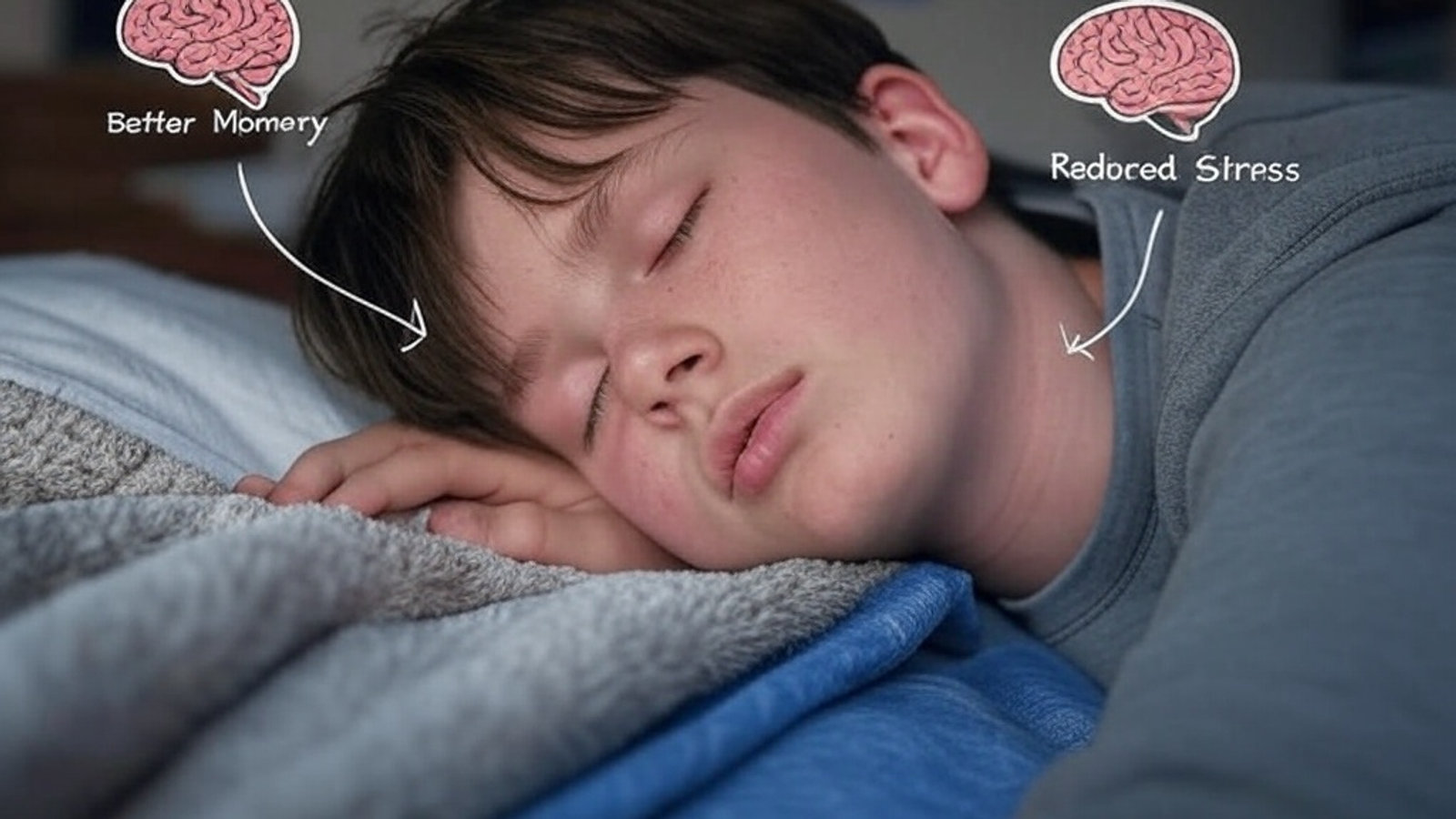
What Happens to Your Brain During an All-Nighter?
Skipping a night of sleep hits memory twice: it makes new material harder to absorb the next day, and it cuts short the sleep that locks in what you studied the day before. Both matter for a test built on rules, methods, and vocabulary you have to retrieve under time pressure.
The first effect is about learning after a lost night. In a 2007 brain-imaging study, Yoo and colleagues found that a single night of sleep deprivation produced a significant deficit in hippocampal activity while people were trying to memorize new material, and they retained less of it afterward. The hippocampus is the brain region that files new facts away.
The second effect is about learning before sleep. Gais, Lucas, and Born tested high school students learning vocabulary. Memory for the words was better when sleep followed within a few hours of studying, and sleep deprivation hurt recall even after a night of recovery sleep.
Put together, an all-nighter means the material from that night is poorly stored, and the material from earlier in the week loses some of the sleep that would have consolidated it.
Why All-Nighters Feel Productive but Aren't
The trap is that sleep loss hides its own damage. You feel like you are working hard, so you assume you are working well.
Pilcher and Walters kept 44 college students awake for 24 hours, then gave them a critical-thinking test. The sleep-deprived group scored significantly worse than students who slept about 8 hours. Yet they rated their concentration and effort higher, and they estimated their own performance higher too.
That gap between feeling and result is exactly what makes all-nighters common. In a survey of 120 college students, Thacher found that 60% had pulled at least one all-nighter since starting college. Those who did tended to have later bedtimes, an evening preference, and lower GPAs. That study shows an association, not proof that the all-nighters caused the lower grades, but it points the same way as the lab results.
| Study | Who was tested | What it found | What it means for SAT prep |
| Yoo et al., 2007 | Adults after one night without sleep | Weaker brain activity while memorizing, and worse retention | A late cram session stores less than it seems to |
| Gais et al., 2006 | High school students learning vocabulary | Recall was better when sleep followed study within a few hours | Study, then sleep; the sleep is part of the learning |
| Pilcher and Walters, 1997 | 44 college students after 24 hours awake | Worse critical-thinking scores, but higher self-ratings | You will not notice how much an all-nighter costs you |
| Thacher, 2008 | 120 college students | 60% had pulled an all-nighter; it was linked to lower GPA | A habit, not a one-off, is the real risk |
How Much Sleep Do You Need Before the SAT?
Aim for 8 to 10 hours, and work backward from your check-in time. The American Academy of Pediatrics puts optimal sleep for teens at 8.5 to 9.5 hours and names school start times before 8:30 a.m. as a key reason so many students fall short.
SAT test day starts early. College Board's test day schedule runs like this:
| Time | What happens |
| 7:45 a.m. | All students check in at the test center |
| 8:00 a.m. | Test center doors close |
| 8:15 to 8:30 a.m. | Testing starts |
| During the test | One 10-minute break between sections |
| 10:45 to 11:00 a.m. | Standard-time testing ends |
For example, if you need to leave home at 7:00 a.m. and want 45 minutes to get ready, your alarm is 6:15 a.m. Nine hours of sleep before that means lights out by 9:15 p.m. If that is far earlier than your normal bedtime, start moving it earlier a week ahead rather than the night before.
Once you add travel and check-in, the SAT fills most of a Saturday morning, so you need energy that lasts past 10 a.m., not just at the start.
What to Do the Night Before the SAT Instead of Cramming
The night before is for protecting what you already know, not adding to it. New material learned that evening has the least time to settle, and it costs you the sleep that would help everything else.
A calm evening plan:
-
Review, don't learn. Read through your error log or a short list of rules you already know. Stop within an hour.
-
Pack your bag early. Put your admission ticket, approved ID, and a charged device with its charger by the door, working from a complete SAT test-day checklist so nothing is left to the morning.
-
Keep your normal routine. Eat a regular dinner, keep screens out of bed, and go to sleep at the time you planned.
-
Set two alarms. One on your phone and one other, so worry about oversleeping does not keep you up.
The morning itself needs margin too. Wake at the time you planned, eat a breakfast you normally eat, and aim to arrive before the 7:45 a.m. check-in so traffic or parking does not eat into your calm. Doors close at 8 a.m., and a late arrival is the one test-day problem that a good night's sleep cannot fix.
In our coaching, we ask students to stop new material about two days before the test. The last days go to light review and rest, because the score comes from skills built over weeks, not from one more evening.
How to Build Sleep Into Your SAT Study Plan
Treat sleep like a study session you never cancel. Most cramming happens because review is squeezed into the last week, so the fix starts weeks earlier with a weekly schedule, whether you study on your own or in a structured SAT prep course.
- Space your reviews. Short reviews spread over days hold up far better than one long session, which is the idea behind spaced repetition.
- Take practice tests in the morning. Starting each of your full-length practice tests at about 8:15 a.m. gets you used to the real start time.
- Keep the same wake time. A steady schedule makes the early test morning feel normal instead of brutal.
- Watch the anxiety loop. If worry keeps you up, work on managing SAT test anxiety in the weeks before, not the night before.
If you are a natural night owl, the timing question matters even more: you can still study at your peak hours and keep the test-day morning intact.
FAQ: All-Nighters and the SAT
Is one all-nighter before the SAT really that bad?
Yes. The lab evidence comes from a single night: one night without sleep weakened memory formation in Yoo and colleagues' study, and 24 hours awake lowered critical-thinking scores in Pilcher and Walters' study. The night before the test is the worst one to lose.
How many hours of sleep should I get before the SAT?
Aim for 8 to 10 hours, the CDC range for ages 13 to 17. Count back from your alarm: with a 6:15 a.m. wake-up, nine hours means being asleep by 9:15 p.m.
Is it better to study late or wake up early?
Neither helps if it cuts into sleep. Study at the hours when you focus best, and keep a consistent wake time so the 7:45 a.m. check-in does not come as a shock.
What if I can't fall asleep the night before the test?
Stay in bed and rest with the lights low instead of getting up to study. One restless night is not ruinous, and cramming at midnight only adds to the problem. Your score rests on weeks of preparation, not on that single night.
Does pulling an all-nighter a week before the test matter?
It matters less than the night before, but it still costs you. Gais and colleagues found that lost sleep hurt recall of material learned beforehand even after a recovery night, so a midweek all-nighter can weaken what you studied that week.
Your Next Step
Plan your test week backward from the 7:45 a.m. check-in. Sleep is the cheapest score protection you have.
- Set your test-day alarm time now and count back 9 hours.
- Shift your bedtime 15 to 30 minutes earlier each night in the final week if needed.
- Stop new material two days out; switch to light review.
- Pack your bag the evening before, then go to bed on time.

Hemant is a seasoned entrepreneur, investor, and growth strategist with deep ground in education and technology-driven learning. His core training is in Mathematics and Physics — he authored Physics for IB Diploma: Ultimate Revision Guide, recognized as a top student resource.